#142
Kenneth Shock
I Got Elon Musk's Brain Chip. Here's What Happened

faith

health
Listen Now
Watch & Listen



Description
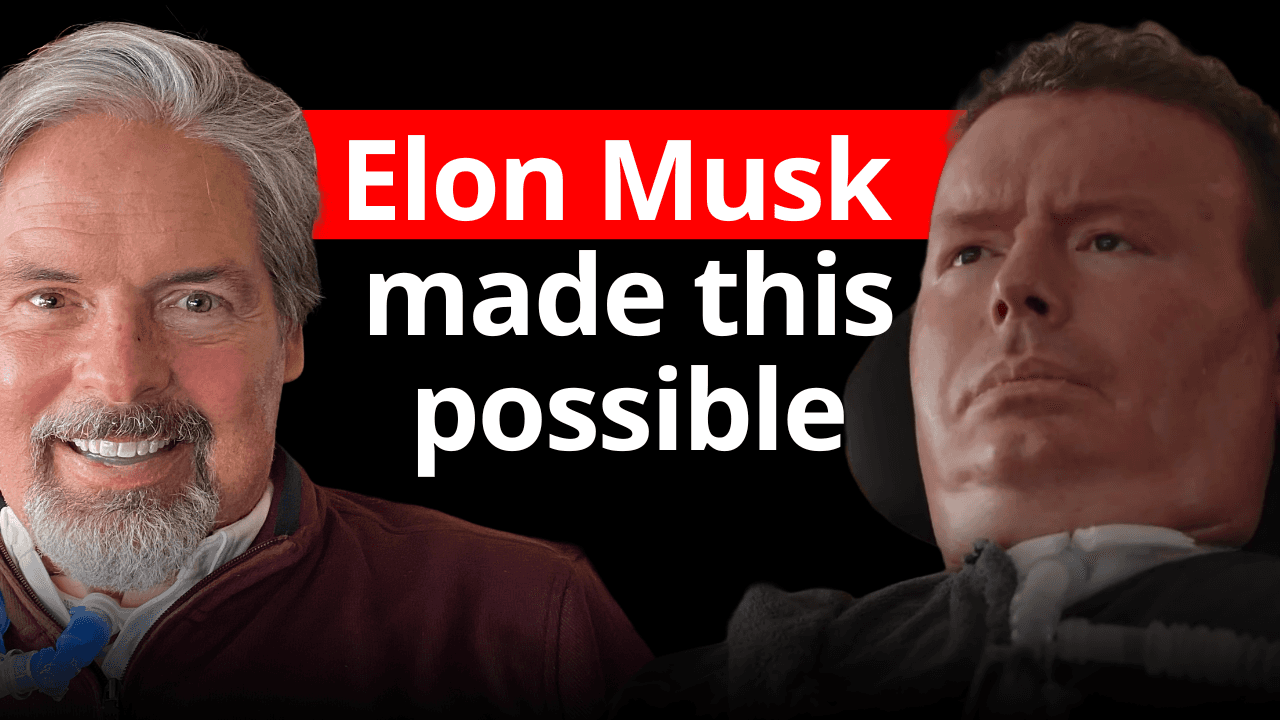
Kenneth Shock: How Elon Musk's Neuralink Brain Chip Helped Him Speak Again After ALS
After losing his voice to ALS, Kenneth Shock received an experimental Neuralink brain implant that gave him a new way to communicate. Now, he shares what life is really like with Elon Musk's brain chip, how it changed his relationship with his wife, and why he believes the technology could transform the lives of people living with paralysis and ALS.
Imagine losing the ability to speak. You can still think clearly, form sentences in your mind, and know exactly what you want to say, but your body can no longer produce the words.
For people living with amyotrophic lateral sclerosis (ALS), this is one of the disease's most devastating consequences.
For Kenneth Shock, a former firefighter and paramedic diagnosed with ALS in January 2024, that loss gradually transformed everyday life. Conversations with his wife became shorter. Simple interactions became frustrating. The familiar sound of his own voice disappeared.
Then came Neuralink.
In Episode 142 of Nothing Left Unsaid, Kenneth joins former NFL player Tim Green, who is also living with ALS, and Tim's son Troy to discuss his experience with Elon Musk's Neuralink brain chip, an experimental brain computer interface that is helping him communicate through signals from his brain.
What follows is a conversation about extraordinary technology, the realities of ALS, and something far more personal: the ability to tell someone you love them.
What Is Neuralink, and How Does Its Brain Chip Work?
Neuralink, the neurotechnology company founded by Elon Musk and others, is developing brain computer interfaces designed to help people interact with digital devices using signals recorded from the brain.
For Kenneth, the technology provides a way to produce speech despite the physical limitations caused by ALS.
But the Neuralink implant does not simply read his private thoughts.
As Kenneth explains during the interview, the implanted sensor threads are positioned near the motor cortex, the region of the brain associated with controlling movement.
The system detects signals associated with his intention to move his mouth and tongue to form words. Those signals are interpreted by software, allowing him to generate spoken communication.
Kenneth describes the process:
"What I need to do is tap the screen to start a sentence and then mouth the words that I want to say."
After completing the sentence, he activates the software to process his intended speech and produce the spoken words.
The system also uses voice synthesis technology associated with ElevenLabs, allowing Kenneth to communicate using a digital recreation of his voice from before ALS.
It is an important distinction. Neuralink has not cured Kenneth's ALS or restored his natural vocal function. Instead, it has provided a new communication pathway that allows his intended words to be expressed through technology.
And for Kenneth and his family, that distinction does not make the experience any less remarkable.
His First Words Through Neuralink Were "I Love You"
One of the most emotional moments of the episode comes when Kenneth and his wife, Cheryl, describe hearing his familiar voice through Neuralink.
Long before his diagnosis, their relationship had been built around conversation.
Cheryl recalls that they first fell in love over the telephone. Hearing Kenneth's voice was central to their connection.
As ALS progressed, those spontaneous conversations became increasingly difficult.
"The house has become so quiet with me not being able to speak comfortably," Kenneth explains.
Before Neuralink, the couple had already used ElevenLabs to recreate his voice from earlier recordings. But typing words into a computer and hearing them read aloud was fundamentally different from Kenneth being able to initiate speech through his own intended movements.
Cheryl describes seeing him communicate through Neuralink and hearing that recognizable voice again.
Then came the words she will never forget.
"I love you."
The moment overwhelmed her.
For Cheryl, this was not simply an impressive demonstration of artificial intelligence or brain implant technology.
It was another way to hear the man she loved communicate with her.
The Reality of Losing Your Voice to ALS
During the interview, Tim Green asks Kenneth a question that only someone living with ALS could fully appreciate.
What is the hardest part of losing your voice that technology still cannot fix?
Kenneth's answer reveals an important limitation.
Although Neuralink has significantly improved his ability to communicate, spontaneous conversation remains difficult.
He still needs to carefully plan what he wants to say.
Before receiving the implant, he and Cheryl had increasingly relied on short text messages to communicate, even when they were together.
Long conversations became brief exchanges about practical needs.
Kenneth also recalls a particularly meaningful evening ritual.
Every night, he used to read books aloud to Cheryl as a way for them to relax together instead of watching television.
As his speech deteriorated, that ritual disappeared.
"We missed the connection that we had in the evenings," he explains.
These experiences illustrate why developing communication technology for people with ALS is about considerably more than convenience.
Communication allows people to express affection, maintain relationships, participate in family life, and preserve a sense of independence.
Neuralink is giving Kenneth new opportunities to do those things, even though challenges remain.
He Suspected ALS Before Doctors Confirmed His Diagnosis
Kenneth's experience with ALS began long before he received his Neuralink implant.
As a former firefighter and paramedic, he had encountered patients living with the disease and recognized many of its symptoms.
When he began experiencing physical difficulties, including unexpected falls, he suspected ALS.
However, he did not immediately share his fears with Cheryl.
She had already experienced the death of a husband, and Kenneth could not bear the thought of putting her through that possibility again.
For months, he kept his concerns to himself.
Eventually, he realized that keeping those fears hidden was creating distance between them.
"We tackle life's problems as a team, and I was leaving my best teammate on the sidelines."
Kenneth finally received his ALS diagnosis in January 2024.
Rather than describing the diagnosis as a moment of shock, he remembers feeling relief.
After months of uncertainty, he finally had an explanation for what was happening to his body.
That clarity also allowed him to begin exploring treatments, research opportunities, and experimental technologies such as Neuralink.
Why Kenneth Chose Experimental Brain Surgery
Receiving a Neuralink brain implant involves a significant decision.
Kenneth was already dealing with reduced lung capacity due to ALS, and the procedure required brain surgery to implant an experimental device.
Yet he believed the potential benefits justified participating in the research.
His decision was motivated by two goals: recovering a meaningful way to communicate and helping advance brain computer interface technology for future patients.
Kenneth says he had followed Neuralink's development closely and was enthusiastic when the opportunity to participate in a speech research trial became available.
His experience with the medical team in Dallas was overwhelmingly positive.
When Troy asks whether he would recommend the procedure to others considering Neuralink, Kenneth emphasizes that each person must evaluate the risks and benefits individually.
But when asked whether he would make the same decision again, his answer is unequivocal.
"Absolutely. Yes, I would."
His experience is encouraging, but Neuralink remains an experimental technology. Individual results can vary, and implant surgery carries risks that require careful medical evaluation.
Troy Green's Emotional Reaction to Seeing Neuralink Work
One of the episode's most memorable moments comes from Troy Green.
Troy has watched his father, Tim, experience the devastating effects of ALS, including the loss of his natural ability to speak.
Seeing Kenneth communicate using Neuralink makes an immediate impression on him.
Troy is astonished by how quickly Kenneth can respond compared with other communication methods he has seen.
During the interview, he becomes so excited about the technology's potential that he starts contacting his father's doctor.
"All right, I got to figure out how to get my dad this like tonight."
His reaction captures something important about the Neuralink story.
For people watching from the outside, a brain implant that converts neural signals into speech may seem like a futuristic technological achievement.
For families living with ALS, it represents the possibility of recovering conversations, laughter, and moments of human connection that the disease has made difficult or impossible.
What Would Kenneth Say to Elon Musk?
Kenneth also discusses his admiration for Elon Musk and the work being done at Neuralink.
When Tim asks what he would tell Musk about the technology, Kenneth says that his experience has already exceeded his expectations.
Cheryl adds that she would simply want to thank him for the difference the technology has made in their lives.
But Kenneth has another request.
He would like Elon Musk to make a wheelchair accessible Tesla.
He also hopes to see a SpaceX Starship launch from Starbase.
The exchange provides a lighter moment in an otherwise emotional conversation and reflects Kenneth's determination to continue pursuing the experiences that matter to him.
Neuralink, ALS, and the Future of Communication
Kenneth's experience demonstrates the potential of brain computer interfaces to improve communication for people with severe physical disabilities.
For people with ALS, losing the ability to speak can create an enormous barrier between what they want to express and what others can hear.
Neuralink is exploring one possible way to overcome that barrier.
Kenneth's experience also highlights the technology's current limitations. Communication still requires deliberate effort, accuracy can fluctuate, and the system does not yet fully replicate natural, spontaneous conversation.
Nevertheless, the progress he describes is significant to him and his family.
For Tim and Troy Green, the conversation offers a particularly personal look at what emerging assistive technology might make possible.
And for Kenneth, the implant is about much more than the technology itself.
It has helped him reclaim a sense of purpose, communicate more effectively with his wife, and contribute to research that could benefit others living with ALS.
Finding Purpose and Independence While Living With ALS
Toward the end of the interview, Kenneth discusses what it means to maintain independence while living with a progressive disease.
He acknowledges that ALS has forced him to reconsider his role within his family.
He never wanted Cheryl to feel that she was only his caregiver.
Instead, he wants their relationship to remain a partnership built around companionship, love, and shared experiences.
Kenneth describes himself as the captain of his own ship.
For him, that does not mean pretending he can do everything independently.
It means preparing for future challenges, accepting help when necessary, and continuing to make meaningful decisions about his life.
His experience with Neuralink has become part of that philosophy.
ALS may have taken away his ability to speak naturally, but it has not taken away his desire to connect with other people or contribute to something larger than himself.
Frequently Asked Questions About Kenneth Shock and Neuralink
Who is Kenneth Shock?
Kenneth Shock is a former firefighter and paramedic living with ALS who received an experimental Neuralink brain implant to help him communicate. He discusses his experience with Tim and Troy Green on Episode 142 of Nothing Left Unsaid.
Can Neuralink help people with ALS speak again?
Neuralink is investigating whether implanted brain computer interfaces can help people with severe speech impairments communicate by interpreting neural signals associated with intended speech. Kenneth's experience demonstrates a promising application, but the technology remains experimental and is not a cure for ALS.
Does the Neuralink brain chip read thoughts?
Kenneth explains that his implant detects signals associated with his intention to move his mouth and tongue to produce speech. It does not indiscriminately read everything he is thinking.
Does Neuralink use artificial intelligence to generate speech?
Kenneth's system interprets signals associated with intended speech and uses software to convert them into words. Voice synthesis technology from ElevenLabs allows those words to be spoken using a recreation of his original voice.
What were Kenneth Shock's first words through Neuralink?
According to his wife Cheryl, the first words he communicated through the Neuralink system were "I love you."
Is Neuralink a cure for ALS?
No. Neuralink does not cure ALS or reverse its underlying neurological damage. The experimental implant is intended to assist with functions such as communication and device control.
Watch Kenneth Shock on Nothing Left Unsaid
In Episode 142 of Nothing Left Unsaid, Kenneth Shock joins Tim and Troy Green for a deeply personal discussion about living with ALS, receiving Elon Musk's Neuralink brain chip, and discovering a new way to communicate with the people he loves.
The conversation explores the promise and limitations of brain computer interface technology, the emotional consequences of losing speech, and the importance of maintaining connection and purpose while facing ALS.
For Kenneth, the greatest achievement of Neuralink is not simply that a computer can produce words from signals in his brain.
It is that he can once again communicate something that matters deeply to him.
"I love you."
Watch the full episode of Nothing Left Unsaid on YouTube, or listen wherever you get your podcasts.